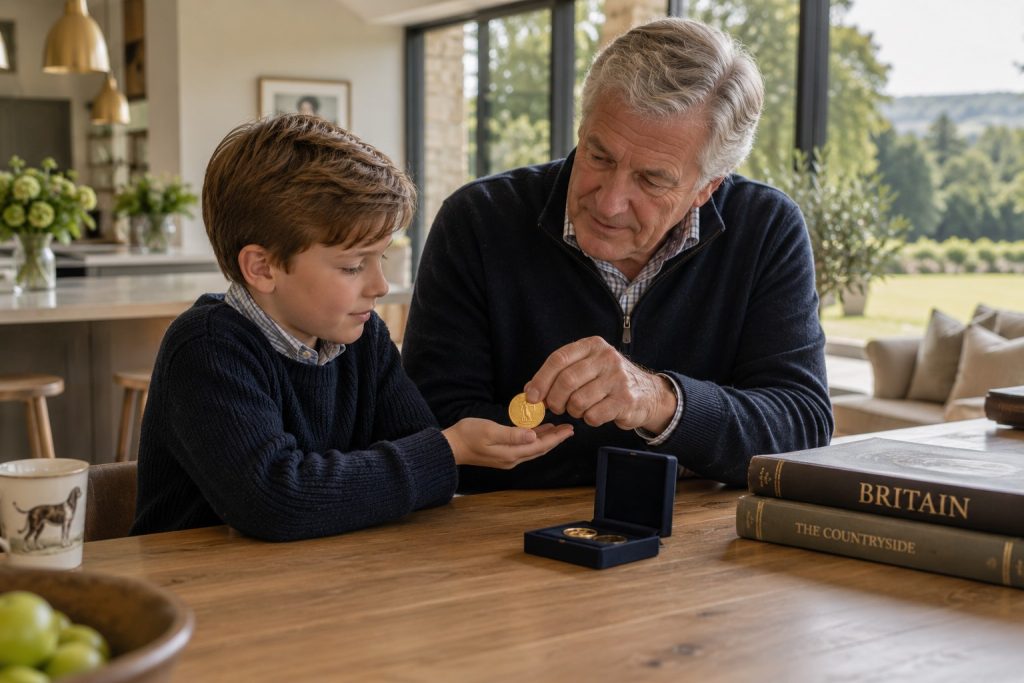
Parents and grandparents are being encouraged to consider giving children a gold coin each Christmas, building a collection to pass on when they reach adulthood. Matthew Jones, Co-founder and Precious Metals Analyst at Britannia Bullion, believes the tradition could offer a gift with both lasting financial value and personal meaning.
His suggestion comes as research from the Institute of Practitioners in Advertising’s (IPA) 2026 Christmas Consumer Report[i] shows that almost half (49%) of UK consumers are not planning to cut back on festive spending this Christmas, up from 42% last year, despite financial pressures.
Matthew said: “Christmas is about giving children presents they can enjoy now, but we all know how quickly the latest must-have toy or gadget can be forgotten. A gold coin is different. It’s a gift chosen with the future in mind, and over time could become a collection with both financial value and personal meaning.”
He suggests buying a gold Sovereign or Britannia each Christmas and keeping the coins safely until the child turns 18 or 21. Each could be accompanied by a handwritten note recording the year, the child’s age and a special memory, perhaps with a photograph, gradually creating a record of their childhood.
“For grandparents, there’s something lovely about giving a present that a grandchild might appreciate even more when they’re older,” Matthew added.
“Imagine handing over a collection when they turn 21, with notes written throughout their childhood. It becomes much more than a financial gift. It’s a reminder that someone was thinking about their future all those years ago.”
Gold Britannias are available in different sizes, including full, quarter-ounce and tenth-ounce coins. As a guide, a tenth-ounce gold Britannia currently costs around £360[ii]. Prices vary depending on the dealer and movements in the gold market.
Matthew stresses the importance of affordability and comparing premiums above the underlying gold value. Families could also contribute together or buy coins for particular milestones rather than every Christmas.
“This shouldn’t become another financial pressure at Christmas,” he said. “The idea is to create a tradition that works for the family. It might be one coin every year or one to mark a special birthday or achievement. What matters is the thought behind it.”
When the collection is passed on, the young adult could keep it, add to it or sell some coins to help fund education, training or a future home. However, Matthew cautions that gold is not guaranteed to increase in value.
“Gold prices can rise and fall, sometimes sharply, and nobody can predict what a collection will be worth in 18 or 21 years. Gold also produces no income, and there are costs involved in buying and selling it. But a collection built over time gives a young person something tangible, with the freedom to decide what to do with it.”
Matthew says families should always buy from a reputable dealer, retain purchase records and ensure coins are securely stored and appropriately insured. They should also establish ownership and who will look after the collection until it is handed over.
Matthew concluded: “There will always be a place for toys, books and gadgets under the Christmas tree. But alongside those presents, a gold coin could be something a child still has in 30 years’ time, perhaps even when they have children of their own. Some gifts are enjoyed for a few weeks. Others can become part of a family’s story.”
For more information visit: www.britanniabullion.com