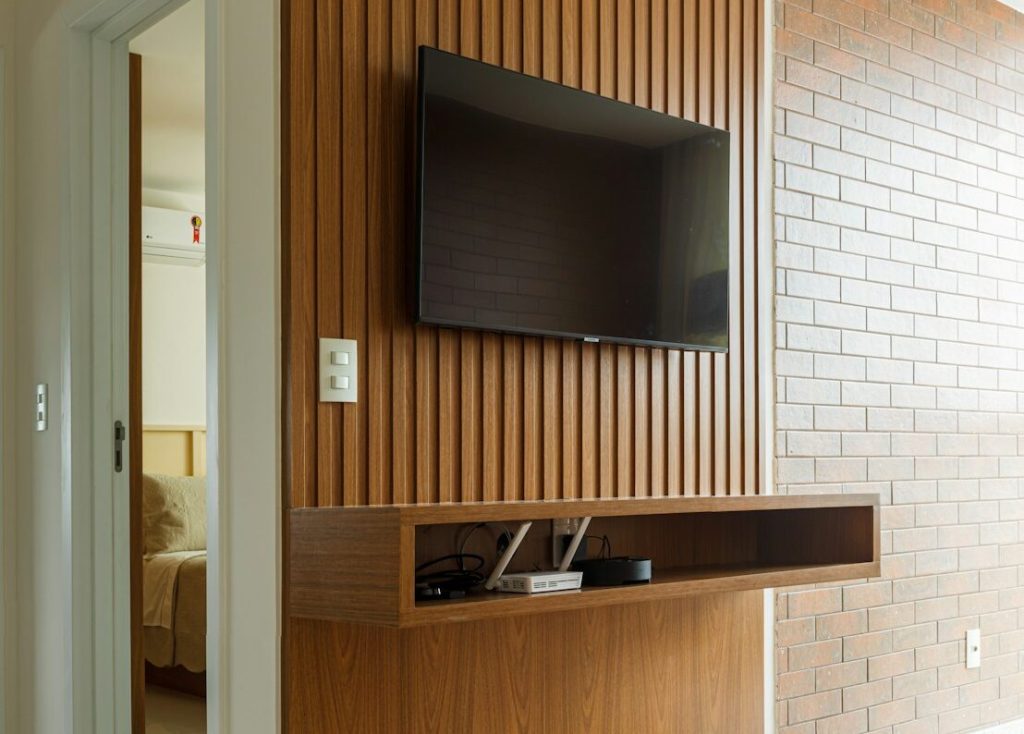
Step into almost any newly renovated home, café or boutique hotel, and you notice it instantly: a warm, textured wall that seems to glow in soft light and swallow unwanted noise. The wooden slat wall has moved from niche design trick to mainstream favourite, reshaping how people think about both style and comfort in interior spaces.
What looks at first glance like a simple decorative panel hides a surprisingly technical solution to some of the biggest frustrations in modern living: echoing rooms, flat acoustics during calls, and interiors that feel cold despite expensive furniture. Behind the clean lines and natural grain lies a clever combination of materials that turns a bare wall into a functional design feature.
In its most popular form, a wooden slat wall consists of slim vertical timber strips mounted on a dark acoustic felt backing. The rhythm of the slats creates depth and shadow, while the felt absorbs sound waves that would otherwise bounce around hard surfaces. The result is a wall that looks like a design statement but behaves like hidden soundproofing.
From echoing living rooms to focused home offices
Open-plan layouts, big windows and hard floors have dominated interior trends for years. They look great in photos, but in real life they often sound terrible. Conversations overlap, video calls echo, and even simple activities like watching a film become tiring because of background noise.
This is where the wooden slat wall steps in as a quiet problem-solver. When installed behind a sofa, along a TV wall or around a dining area, the slats and felt backing break up and absorb sound. Voices become clearer, background noise softens and the room feels calmer without anyone quite knowing why.
Home offices benefit even more. Remote work has turned spare rooms and corners of living spaces into full-time work zones. A single slatted wall behind a desk improves microphone sound for online meetings and reduces the sharp reflections that make long calls exhausting. It also creates a professional-looking backdrop that feels intentional rather than improvised.
A fast track to boutique-hotel atmosphere at home
Beyond acoustics, the appeal of wooden slat walls lies in their ability to transform mood. Natural timber instantly warms up minimalist spaces that risk feeling sterile. The vertical lines draw the eye upward, making ceilings seem higher and rooms more generous.
Designers use this to create a boutique-hotel feel without rebuilding entire rooms. A slatted headboard wall in the bedroom frames the bed and adds depth behind simple bedding. In hallways, a narrow section of slats turns a forgotten passage into a gallery-like entrance. Even small city flats gain a sense of crafted detail that standard plaster walls rarely deliver.
Lighting plays a crucial role here. When you place LED strips in the ceiling washing down over the slats, the shadows between them come alive. The wall appears to shift throughout the day, catching natural light in the morning and glowing softly in the evening. That dynamic quality makes the space feel more considered and less static.
Sustainability and the return of tactile interiors
As people grow more conscious of materials, the choice of real wood over plastic imitations matters. Many slat systems use responsibly sourced timber and recycled acoustic felt, aligning design ambitions with environmental awareness. Instead of covering walls with synthetic panels, homeowners choose surfaces that age with character and can be repaired or refinished.
This focus on tactility marks a shift away from the ultra-sleek, glossy look that dominated for years. Fingers naturally trace the grooves of the slats; the wall invites touch rather than repels it. In living rooms and reception areas, that subtle texture adds a layer of comfort that goes beyond cushions and throws.
From DIY upgrades to large-scale projects
One reason wooden slat walls spread so quickly is practicality. Many systems come as modular panels that you mount directly onto existing walls or batten frames. For confident DIY enthusiasts, a weekend is enough to transform a tired living room wall or staircase side into a striking feature.
Professionals take the concept further. Restaurants use full-height slatted walls to divide zones without blocking light or sightlines. Offices wrap meeting rooms in slats to balance transparency with privacy and better acoustics. Retail spaces frame product displays with timber panels that photograph beautifully for social media while softening the buzz of shoppers.
The flexibility extends to colour and finish. Natural oak remains a favourite for its warmth, but darker smoked tones add drama, while painted slats match contemporary monochrome schemes. Some choose to mix widths or introduce subtle gaps for integrated shelves, hooks or hidden doors.
Where this trend is heading next
The rise of the wooden slat wall is not just another passing decorative fad. It reflects a broader shift in how people think about their homes and workspaces: interiors must look good on screen, feel comfortable in daily use and support concentration in busy households.
As hybrid working settles in and people continue to invest in their living spaces, demand for acoustic comfort and natural materials is set to grow rather than fade. Slatted timber solutions answer both needs in one move. They bring visual rhythm, warmth and a sense of crafted detail, while quietly improving the way a room sounds and behaves.
In the coming years, expect to see the concept evolve into ceilings, furniture fronts and room dividers that echo the same vertical language. For now, a single feature wall already offers a powerful upgrade: a simple, tactile surface that turns noise into calm and bare walls into something worth looking at every day.